Setting Up Your RV: Leveling, Awnings and Arrival
The first hour on site sets the tone for the whole race weekend. Get the rig level, the awning out and the essentials connected before you relax, and everything that follows is easier. Set up badly and you will spend the week chasing a fridge that will not run, a door that will not close and a cup of coffee that slides across the table.
Setting up a dry campsite is not complicated, and it follows the same order every time. Choose the spot, level the rig, deploy the outdoor space, then check the systems. At Speedway Sports Park the whole process takes most guests less than an hour once they know the sequence.
Choosing where to park
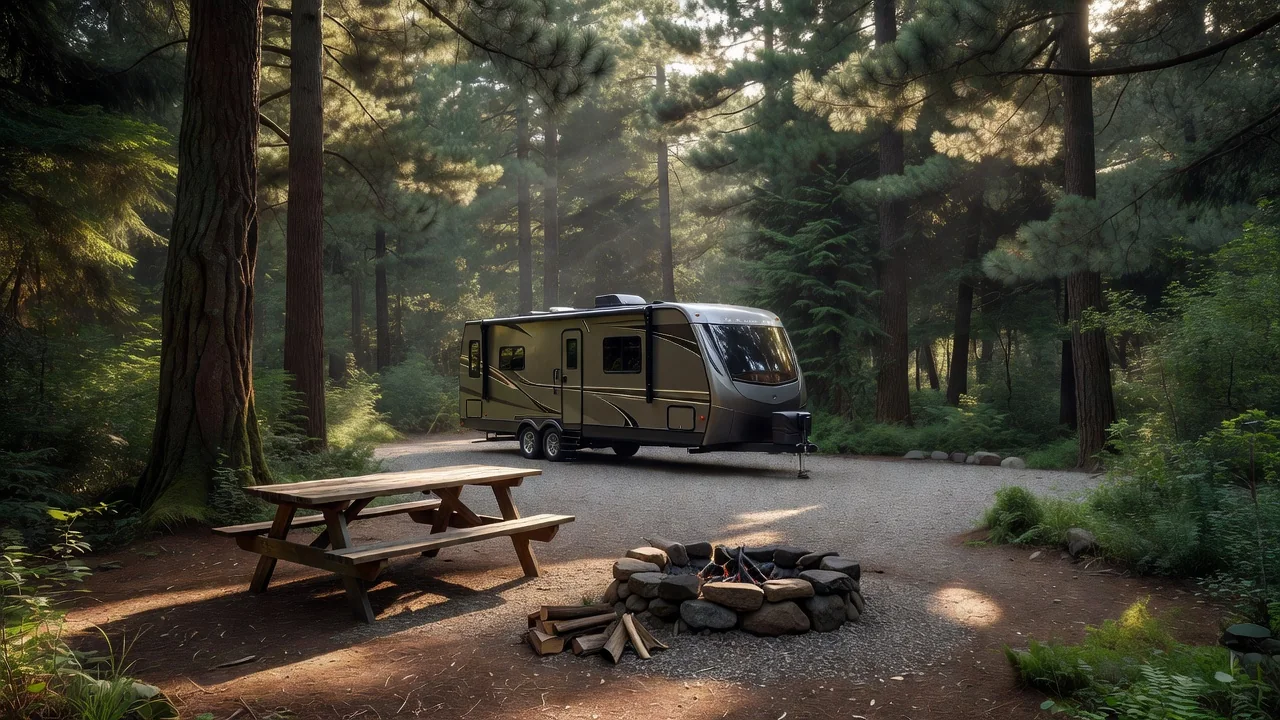
Position matters more than people expect at a dry site. Park so the awning faces away from the prevailing weather, leave room for your neighbours to open their own, and keep the fire ring clear of anything that could catch a stray spark. On a shared field, the space you take shapes the row for everybody.
Think about shade and drainage as well as view. A tree-line site offers afternoon relief from the sun, while the centre sites catch more of it and dry faster after rain. Whichever you choose, check that the ground under the wheels is firm, because soft ground makes every other part of the setup harder.
| Step | What to do | Why it matters |
|---|---|---|
| Position | Face the awning away from the weather | Comfortable outdoor space all week |
| Level | Use blocks or ramps under the wheels | Fridge, doors and tanks work properly |
| Awning | Deploy with a slight fall for rain | Stops water pooling on the fabric |
| Systems | Check gas, water and power | Catches problems before nightfall |
Leveling the rig
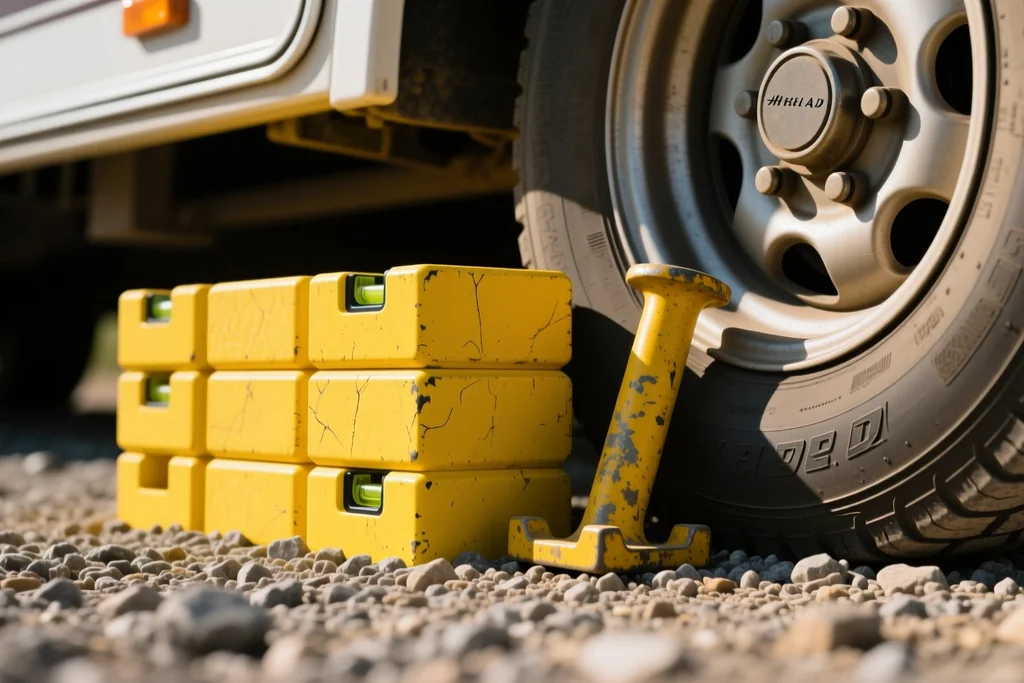
Leveling is the step that beginners skip and then regret. A refrigerator in an unlevel rig cools poorly, doors swing on their own and the sensation of sleeping on a slope is hard to ignore. Drive onto leveling blocks or ramps, check with a small spirit level, and adjust until the bubble sits where it should.
Do the work before you unhitch and before the awning goes out. Once the rig is stable and settled, resist the temptation to nudge it later, because every small move means redoing the leveling. A few minutes of patience at the start saves a week of quiet annoyance.
The awning and the outdoor room
An awning doubles the living space of any rig and becomes the heart of the campsite. Roll it out with a gentle fall toward one corner so rain runs off rather than pooling, and secure the legs properly even in calm weather. Summer storms in New England arrive quickly, and an awning that was fine at noon can be straining by late afternoon.
Furnish the space for the way you will actually use it. Two chairs by the fire, a small table for the stove and a mat at the door cover most needs. Anything more elaborate is welcome but optional, and most guests refine their setup over several seasons rather than getting it right on the first trip.
Connecting and checking
With the rig level, run through your systems in a fixed order. Check the propane is open and the fridge has caught, confirm the water pump is working and the tank is full, and make sure the battery has enough charge for the evening. Doing this at a set time each trip means a fault shows up before it matters.
Because the site is dry, there is no cable to plug in and no tap to attach. That removes two of the usual failure points, but it puts more weight on the systems your rig carries. Know your battery, your pump and your gas, and the dry arrangement becomes an advantage rather than a worry.
Weather-proofing the site
- Stake or weight anything the wind can lift, including chairs and mats.
- Angle the awning so rain drains instead of collecting.
- Keep the fire ring clear and never leave a fire unattended.
- Store food and rubbish in sealed containers before you sleep.
- Check the forecast each morning, because conditions change fast in summer.
These are small habits, and together they are the difference between a site that looks after itself and one that demands attention every hour.
Breaking camp on Monday
Packing up is the setup in reverse, and it is easiest done calmly rather than in a rush. Dump your tanks at the Main Lot station on the way out, stow the awning dry if you can, and walk the pitch once for anything left behind. Leave the site as you found it, because the next guest arrives within the season and the row has a memory.
The first night on site
The first evening of a race weekend is for settling rather than achieving. Once the rig is level and the essentials are running, resist the urge to perfect the site. A simple meal, a short walk to learn the layout and an early night leave you far better placed for the busy days ahead.
Walk the row on that first evening and note the useful things you will need later: the nearest water point, the dumpsters, the path to the showers and the quickest route to the gates. Ten minutes of orientation saves a dozen questions across the week, and it helps you meet the neighbours at the same time.
Check the weather forecast before you sleep and adjust what you can. If rain is coming, tighten the awning, secure anything loose and move what should stay dry under cover. A few minutes of forethought on the first night prevents a wet, hurried morning later in the week.
Slot the whole sequence into a routine and it stops being a chore. Position, level, awning, systems, weather, then depart in reverse. A well-set-up camp is not about equipment; it is about doing a short list of simple things in the right order, every time you arrive.