Dry Camping Basics: Water, Power and Waste
Every site at Speedway Sports Park is dry camping, which sounds like a limitation until you understand how the park is built around it. There is no water or power post at the individual pitch, so guests manage their own supply for the length of the stay. The park covers the hard parts by providing fill-up stations, a free dump station and hot showers nearby.
Dry camping is a skill rather than a hardship, and it is one that rewards a little planning before you arrive. Understand three things — fresh water in, waste out, and enough power to run the essentials — and a full week off the grid becomes entirely routine. Everything else is comfort rather than necessity.
What dry camping means at the park
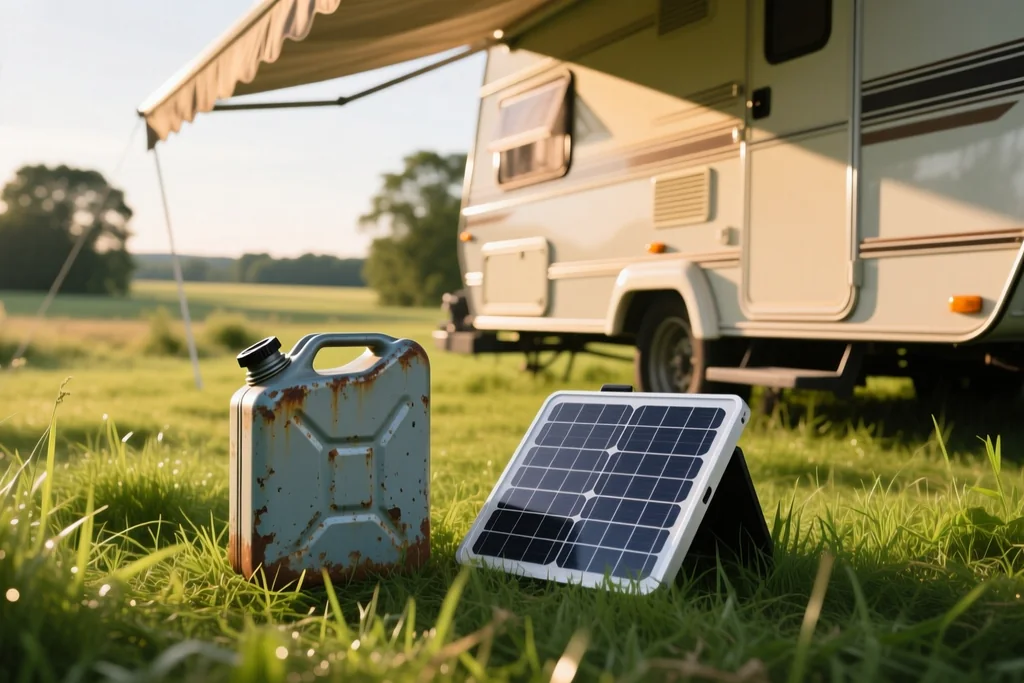
A dry site is simply a site without connections. You arrive with empty or partial tanks, fill fresh water from the stations along the tree line, and settle in without plugging into anything. Your rig becomes a self-contained unit for the duration, which is true of most modern RVs and of the way experienced campers prefer to travel.
The park is honest about this arrangement rather than apologetic, because it is what makes the pace of a race weekend possible. Thousands of rigs settle in within a few days, and a shared field without individual posts can absorb them without queues at every site. Knowing that in advance is half the preparation.
Managing fresh water
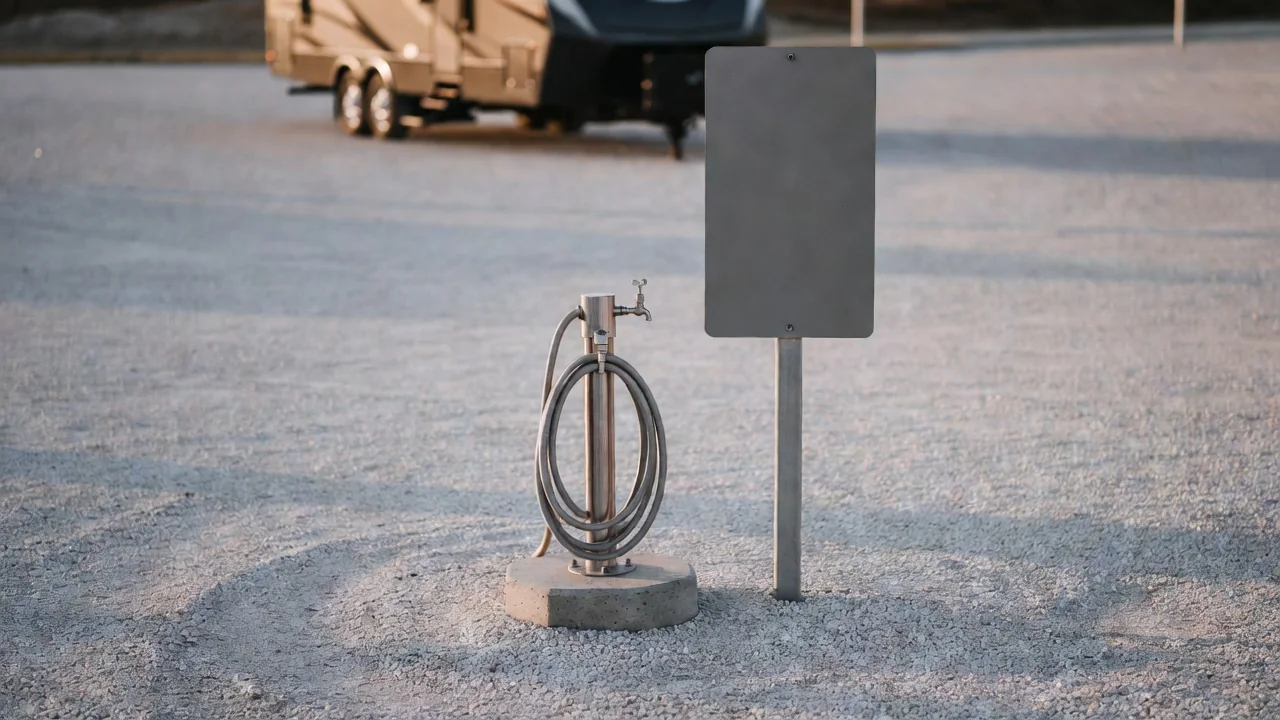
Water is the resource you think about most and waste the fastest. Fill at the tree-line stations or the Main Lot point on your way in, and keep track of how much you actually use. Showers, washing up and drinking add up quickly, and a family of four burns through a tank far faster than a solo camper.
The simplest way to stretch water is to treat it deliberately. Use the park's hot showers rather than the rig's, wash dishes in a basin rather than under a running tap, and keep drinking water in a separate jug so it is easy to monitor. Guests who think about water for the first day rarely think about it again.
| Resource | Where it comes from | How to manage it |
|---|---|---|
| Fresh water | Tree-line and Main Lot fill stations | Fill on arrival, then ration gently |
| Power | Your own battery bank or generator | Charge outside quiet hours |
| Waste water | Held in your tanks | Use the rig sparingly, dump last |
| Grey water | Held in your tanks | Keep to the site rules |
Power without shore hook-ups
Battery capacity decides how comfortable a dry week feels. A single house battery runs lights and a fridge for a while, while a larger bank or a solar panel extends that considerably. Know what your rig can carry before you rely on it, because a race weekend is not the place to discover that your fridge drains the battery overnight.
Generators fill the gap, but they come with rules. All generators are off during quiet hours, and units judged excessively loud or a fume hazard can be suspended, so a quiet inverter model is worth its weight. Rental generators can be arranged for the weekend if your rig does not carry one, which saves the purchase for the occasional camper.
Dealing with waste
Waste is the subject nobody enjoys and everybody has to manage. Keep black and grey water in your tanks through the stay and dump on departure at the free station by the Main Lot showers. Dumping early is rarely useful, and the station is quietest before the Monday morning rush rather than during it.
Small habits make the tanks last longer. Use the park's showers and washroom where you can, keep food scraps out of the sink, and give the black tank a rinse before you empty it. A clean dump is a five-minute job; a neglected one is a chore that colours the whole week.
Staying comfortable for a week
- Arrive with a full propane supply and a spare canister if you cook often.
- Charge everything you can outside quiet hours and unplug when it is done.
- Keep a separate drinking-water jug so you can see how much remains.
- Pack lighting that is battery-powered, so evening does not depend on the rig.
- Plan for a hot shower at the Main Lot rather than the frugal one on board.
None of this is complicated once it becomes habit, and it is the same routine whether you are camping in Loudon or anywhere else off the grid.
A short dry-camping checklist
Before you travel, confirm your fresh tank capacity, your battery condition and your propane level, and carry a hose, a spare washer and gloves for the dump station. Add a small funnel, a basin for washing and a headlamp for the dark corners of the rig. Those few items cover almost every problem a dry week can produce.
Common first-week mistakes
Most dry-camping problems trace back to the same handful of oversights. Guests arrive with empty propane, a weak battery or no hose for the fill stations, and spend the first day solving problems that a five-minute check would have prevented. Arriving prepared is worth more than any gadget you could buy.
The other frequent mistake is overestimating how much power and water a household uses. A family that runs the fridge, charges devices and showers on board will empty a tank and drain a battery far faster than they expect. Watching the levels closely for the first day teaches you your own limits better than any rule of thumb.
The reward for the effort is a stay that feels genuinely self-sufficient. You arrive, you settle, you fill once and you dump once, and the race weekend owns the rest of your attention. Dry camping is not a compromise at Speedway Sports Park; it is simply how a full park of race fans camps together.