Campers, Neighbours and Traditions: The Social Side of the Park
A race weekend in Loudon is more than a sporting event. It is a neighbourhood that assembles for a few days each summer, breaks bread, argues about qualifying, and then dismantles itself on a Monday morning. Speedway Sports Park is built for that rhythm, and the social side of the place is as much a reason to return as the short walk to the gates.
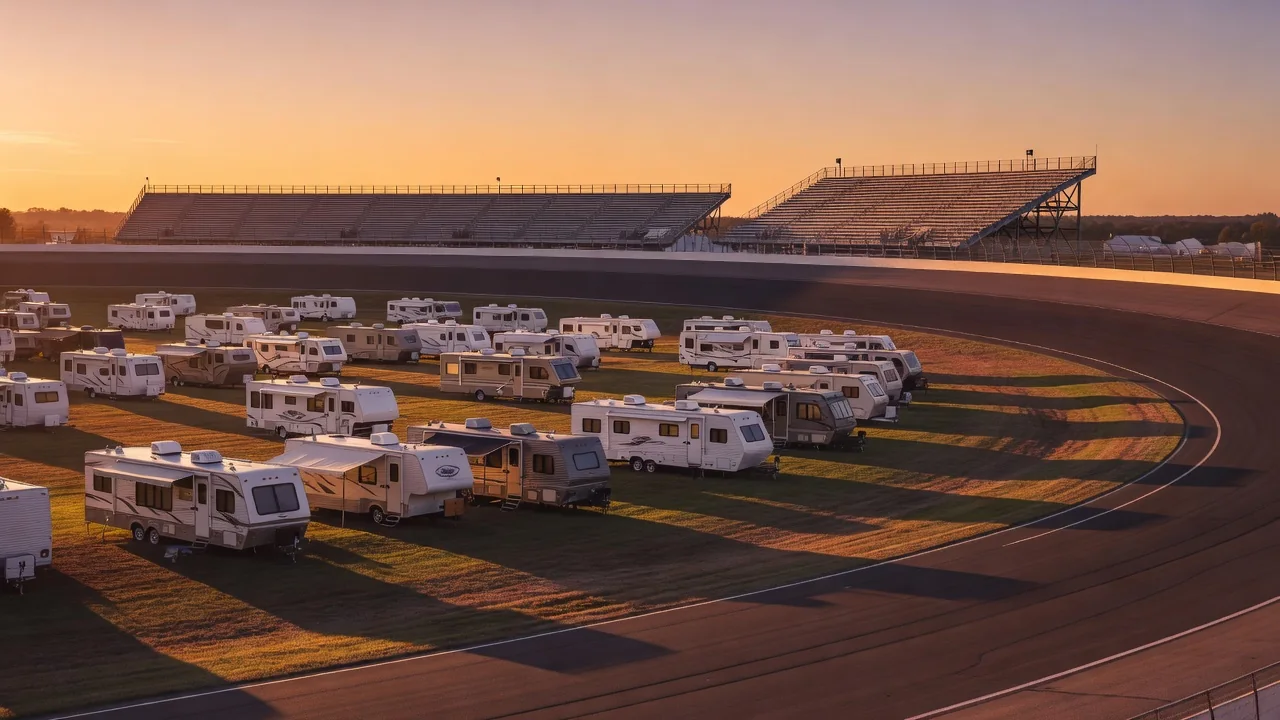
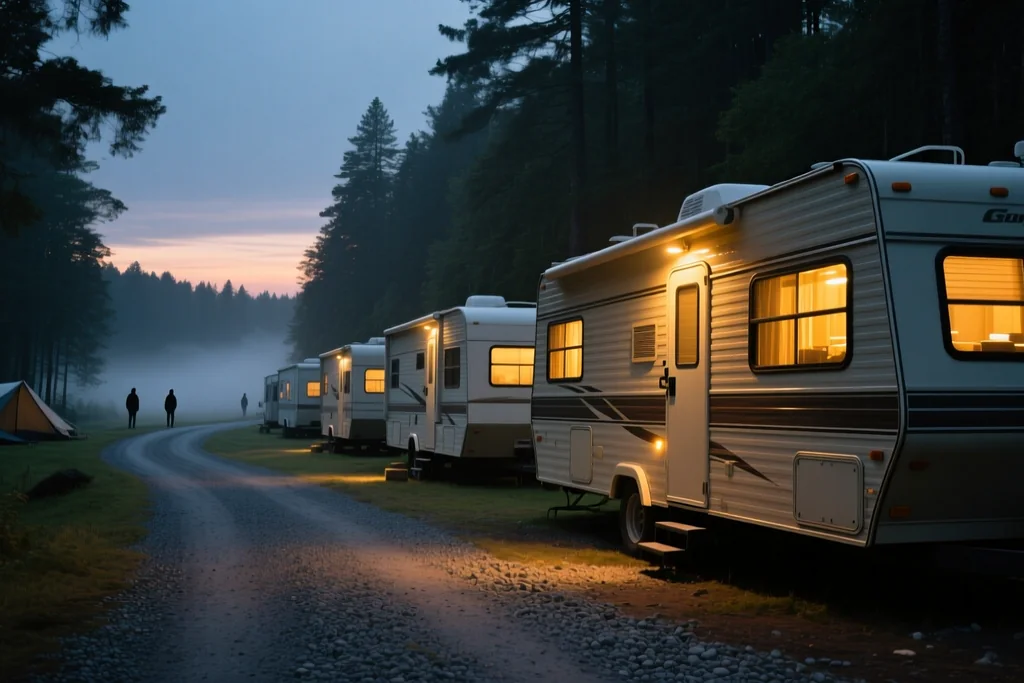
Rows of rigs become streets with their own character. The tree-line sites fill first and tend to gather the guests who have been coming for years, while the centre sites attract a livelier, more mixed crowd. Wherever you land, the etiquette of a shared field is what keeps the week friendly.
Why the row matters
Campers talk about rows the way residents talk about streets. A row develops habits within the first evening: who puts the coffee on early, who owns the good spare gas hose, who is happy to help swing an awning out. Families with children find each other quickly, and so do the guests who prefer a quieter corner away from the busiest footpaths.
Because the park hosts the same community year after year, favourite positions become traditions. People ask for the same site they took the year before and settle in beside the same neighbours. That continuity is not something a hotel can sell, and it is the main reason a race weekend here feels familiar from the moment you drop the stabilisers.
Traditions that repeat every season
Certain things happen in the park without anyone scheduling them. Fire rings light up along the rows as the evening cools, and conversations drift between sites as easily as they do on a residential street. The Sunday cookout closes the weekend and gives the park one shared table before everybody scatters home.
Live entertainment adds a rhythm to those evenings and pulls guests out of their own camps for an hour or two. What is planned matters less than what is not: the unplanned conversations, the borrowed tools, the children on bicycles who know the safe loop by the second day. Those are the details that turn a camping stay into a habit.
| Part of park life | What it looks like | Why guests value it |
|---|---|---|
| The row | Neighbours who return to the same sites | Familiar company from the first evening |
| Evening fires | Camp chairs gathered between rigs | Easy conversation after a day at the track |
| Sunday cookout | One shared meal before departure | A natural end to the weekend |
| Live entertainment | Music in the park during race week | Something to do beyond the speedway |
Etiquette that keeps the peace
Shared space works because most people follow a few unwritten rules. Generators go off before quiet hours rather than at the first complaint, dogs stay leashed, and trash reaches a dumpster the same evening it is created. Nobody has to be told twice; the park is simply better when everyone plays the same part.
Newcomers pick up the customs quickly because they are obvious rather than obscure. Walk through a row on a Saturday morning and the pattern is plain: quiet fume-free mornings, busy afternoons, social evenings, and an 11pm line that everybody respects. Following that rhythm is the whole of the social contract here.
Finding your people in the park
Nobody has to be an extrovert to enjoy the social side of a race weekend. The easiest opening is the most ordinary one: a comment about the rig next door, a question about the weather, an offer to share a spare part. Campgrounds are forgiving places to meet strangers, because everyone already has something in common and nobody is in a hurry.
Guests travelling alone often discover that the park is friendlier than they feared. Shared interests do the introductions, and by the second evening a solo camper usually has a chair pulled up somewhere. If you prefer your own company, that is respected too, and a quiet corner site gives you exactly the distance you want.
A park that remembers its regulars
Ask around a full row and you will meet guests who have attended the same weekend for a decade or more. They bring the same chairs, cook the same meals and greet the same neighbours, and in doing so they set the tone for everyone camping nearby for the first time. Their presence is why a first visit to Speedway Sports Park rarely feels like a first visit at all.
Settling into the row
A first race weekend among strangers becomes comfortable faster than most people expect. Introduce yourself to the nearest two or three sites on the first evening, ask where the water point is and offer nothing more than a greeting. Neighbours who know your face are far more likely to look out for your rig and your children for the rest of the week.
- Say hello to the sites beside you on arrival day, not on the last night.
- Learn the quiet-hours line and the generator rule before the first evening.
- Keep your own music inside your own site rather than across the row.
- Offer help with an awning or a level; it is returned all week.
None of this is complicated, and that is the point. The park asks only for the ordinary courtesy that makes a shared field work, and in return it hands back a community that many guests look forward to all year. Pack a friendly manner alongside the rest of your gear and the row will do the rest.
That is the honest appeal of the place. It offers dry sites, hot showers and a short walk to the speedway, and then it lets a community do the rest. Bring your rig, claim your corner, and you will understand within one evening why so many guests already know the name of the person camped beside them.