NASCAR Terms for Beginners: A Race Weekend Glossary
Walking into a speedway for the first time can feel like arriving in a country where everyone speaks a language you half recognise. The talk around you is full of flags, stages and grooves, and the public address system assumes you already know what they mean. A short glossary closes that gap faster than a whole afternoon of guessing.
You do not need to know every term to enjoy a race weekend near New Hampshire Motor Speedway. Learn the handful that shape the running of the race, and the day becomes far more interesting. The rest you will pick up simply by being there, which is how most fans learned it in the first place.
Why the language matters
Motorsport has its own vocabulary because the sport itself is precise. A flag is not decoration; it is an instruction to every driver at once. A stage is not a suggestion; it divides the race into scoring sections. Once you know what the words mean, you can follow the story of the afternoon the same way an experienced fan does.
The terms also connect you to the people around you. Ask a neighbour on the grandstand what a caution means and you will get a friendly explanation and a conversation. The shared language of a race weekend is one of the easiest routes into the crowd.
| Term | What it means | When you will hear it |
|---|---|---|
| Pole position | The first starting spot on the grid | After qualifying |
| Green flag | Racing underway at full speed | At the start and after a caution |
| Caution | A slowdown while the track is cleared | After an incident on track |
| Checkered flag | The end of the race | On the final lap |
| Pit road | Where cars stop for service | Throughout the race |
Flags and signals
Flags are the simplest system in the sport and the most important to recognise. A green flag means racing at speed, a yellow or caution flag slows the field, and a red flag stops it entirely. A white flag warns of the final lap in some contexts, and the checkered flag ends the race for good.
Once you can read the flags, you can read the race. The moment a yellow appears, look to pit road, because that is where the strategy shifts. Teams weigh the cost of stopping against the risk of staying out, and those decisions often decide who is in front at the end.
The track and the cars
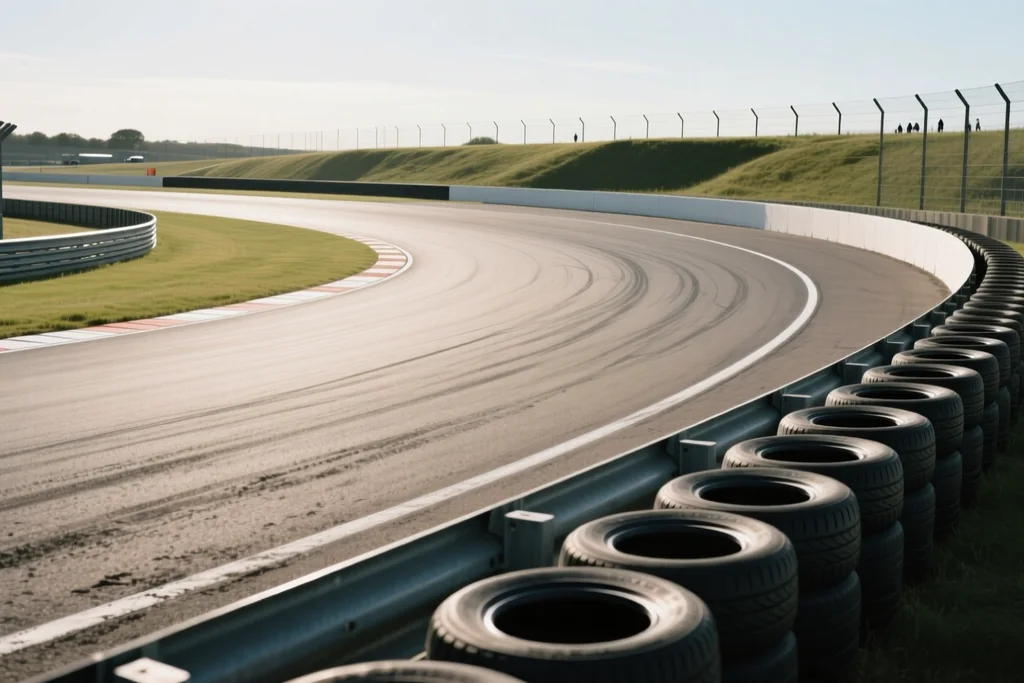
A short track like the one in Loudon rewards precision rather than raw top speed. Cars run close together, the corners come up quickly and small mistakes cost real positions. The banking of the turns, the width of the racing surface and the length of the straights all shape how the field spreads out.
Terms like the groove describe the fastest line around the circuit, and marbles describe the rubber debris that collects off that line. Loose and tight describe how a car behaves through a corner, and a driver complaining of one or the other is telling the crew what to change. Listen for those words during the race and the commentary starts to make sense.
The race weekend structure
A race weekend is more than the main event. Practice sessions let teams learn the track, qualifying sets the starting order, and support races fill the hours around them. The main race itself is often divided into stages, with points awarded at the end of each one before a final run to the finish.
Understanding the structure helps you plan your day at the speedway. If the main event is hours away, there is still plenty to watch, and the earlier sessions are often the most relaxed time to walk the grounds. Race day itself is loud and busy, so knowing when the important moments fall makes the whole afternoon easier to follow.
Pit road and the crew
- A pit stop is a team sport measured in seconds, not minutes.
- Fuel, tyres and small adjustments happen all at once.
- Penalties can be handed out for an unsafe release or speeding on pit road.
- The crew's speed under pressure often decides the race outcome.
- Pit strategy can matter more than raw speed over a long run.
Watching a pit stop closely is one of the best ways to appreciate the sport, even from the grandstands.
What the announcers mean
Race commentary moves quickly, and a few phrases return constantly. When the announcer says the field is bunched up, the cars are running close together after a caution. When they mention a long run, they mean a stretch of green-flag racing without interruption. When they talk about dirty air, they mean the disturbed airflow that makes it harder for a following car to pass.
Terms that come up in conversation
Some of the most useful words are the ones fans use casually rather than officially. When somebody says a driver is running in the pack, they mean the group of cars behind the leaders. When they talk about the closing laps, they mean the final stretch when positions matter most. These phrases fill the air around any grandstand.
Weather adds its own vocabulary, because a wet track changes everything. A race can be delayed, shortened or run behind a pace car depending on conditions, and the question of the morning is often simply whether the track is dry. Listening to the announcements keeps you ahead of those decisions.
None of this vocabulary is closed to newcomers. Ask about a phrase you do not know and you will get an answer, usually with a story attached. That openness is one of the best things about a race weekend crowd, and it turns a glossary into a conversation.
Learn a dozen terms, watch a full race with the sound on and the meaning follows quickly. Bring this glossary to Loudon, ask a question or two of the people beside you, and by the closing laps you will be reading the race like a regular.